
When most people think about restorative dentistry, they picture repairing a cavity, replacing a missing tooth, or restoring a broken crown. While these treatments certainly address damaged teeth, their purpose extends well beyond fixing a single dental problem.
Your teeth work together every time you chew, speak, smile, and bite. When one tooth becomes weakened, damaged, or lost, it can affect how your entire mouth functions. That’s why restorative dentistry focuses not only on repairing individual teeth but also on preserving comfort, supporting healthy function, and helping maintain long-term oral health.
At Crews Dental, restorative care is part of a personalized approach to dentistry that considers your oral health as a whole. Every treatment recommendation is based on your unique needs, helping protect your natural smile while supporting healthy function and long-term wellness.
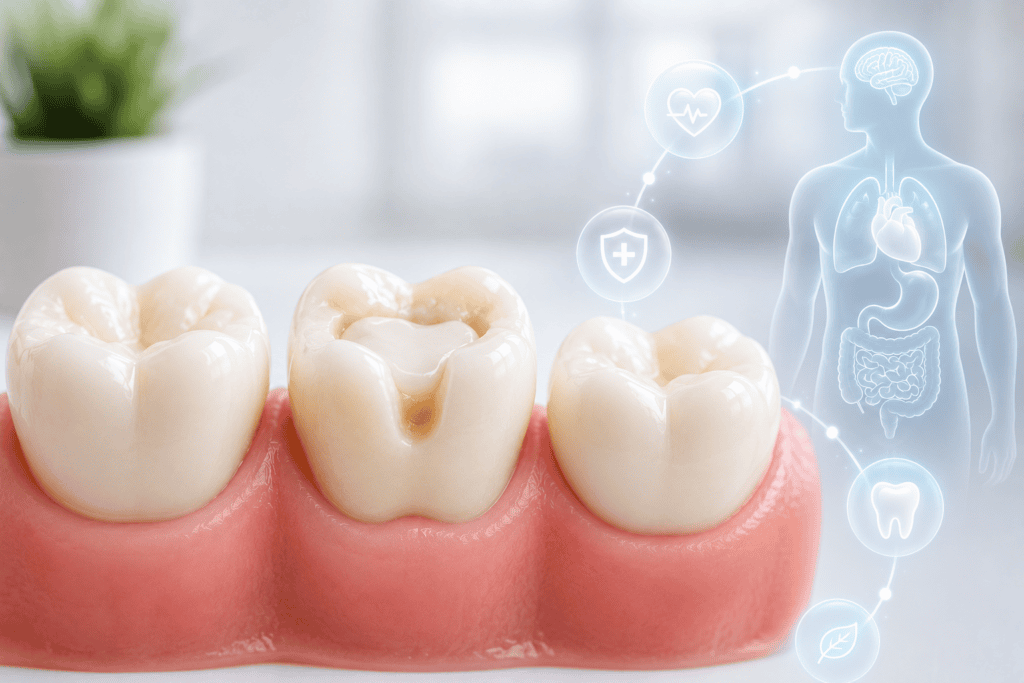
Healthy Teeth Work Best Together
Each tooth has an important role to play. Rather than functioning independently, your teeth work together as a complete system to help you chew efficiently, speak clearly, and maintain a balanced bite.
When a tooth becomes damaged, the effects may extend beyond the area you can see. You might unconsciously chew on one side of your mouth, place additional pressure on neighboring teeth, or experience changes in how your bite comes together.
Over time, these changes can contribute to uneven tooth wear, discomfort while chewing, or additional stress on surrounding teeth. Restoring a damaged tooth helps support the balance of your smile and maintain healthy function throughout your mouth.
Restorative Dentistry Is Also Preventive Care
One of the biggest misconceptions about restorative dentistry is that it’s only necessary after significant damage has occurred. In reality, many restorative treatments help prevent smaller problems from becoming more complex.
For example, treating a small cavity with a tooth-colored filling can help preserve healthy tooth structure before more extensive treatment becomes necessary. Likewise, restoring a weakened tooth may help protect it from additional damage while maintaining its function.
This preventive approach aligns with Crews Dental’s philosophy of preserving natural teeth whenever possible. By addressing concerns at the appropriate time, patients often have more treatment options available and may avoid more extensive restorative care in the future.
Every Restoration Should Fit the Patient, Not Just the Tooth
No two smiles are exactly alike, which means restorative dentistry should never follow a one-size-fits-all approach.
When recommending treatment, your dentist considers several factors, including:
- The condition of the affected tooth
- How much healthy tooth structure remains
- Your bite and chewing function
- Existing dental restorations
- Your oral health goals
- Your long-term treatment needs
Depending on these factors, treatment may involve a filling, a same-day crown, a dental bridge, a dental implant, or another restorative solution. The recommendation isn’t based on a single procedure being universally better than another. Instead, it’s about selecting the option that best supports your oral health, function, and long-term wellness.
How Restorative Dentistry Supports Long-Term Oral Health
Restoring a damaged tooth isn’t just about addressing today’s concern. It’s also about protecting your oral health for the future.
When a tooth is repaired or replaced appropriately, it can help maintain proper chewing function, support neighboring teeth, and contribute to a healthier bite. This reduces unnecessary stress on surrounding teeth and helps your smile function as it was designed to.
Restorative care can also make it easier to maintain good oral hygiene. Healthy, properly restored teeth are often easier to clean than damaged teeth that have cracks, large areas of decay, or worn restorations. As part of a personalized treatment plan, restoring teeth can help support your long-term oral health goals.
Modern Dentistry Supports More Precise Treatment Planning
Advances in dental technology have made restorative dentistry more precise than ever before.
Digital diagnostics and modern imaging allow your dentist to gather detailed information about your teeth, bite, and surrounding structures before recommending treatment. This comprehensive evaluation helps ensure that every restoration is planned with both immediate concerns and long-term function in mind.
Technology also supports greater accuracy when designing restorations such as same-day crowns, allowing treatment to be tailored to your individual smile while improving efficiency throughout the process.
While technology is an important part of restorative care, it never replaces personalized clinical judgment. At Crews Dental, every recommendation is based on a thorough evaluation of your oral health, your concerns, and your long-term goals.
Restoring a Smile Means Restoring Confidence, Too
Although restorative dentistry is primarily focused on improving oral health and function, many patients also appreciate the confidence that comes with restoring their smile.
A damaged or missing tooth can affect how comfortably you eat, speak, or smile. Restoring your teeth can improve comfort during everyday activities while also helping your smile look healthy and complete.
At Crews Dental, the goal isn’t simply to improve appearance. Every treatment plan is designed to balance healthy function, long-term stability, and natural-looking results that fit your individual smile.
Personalized Dentistry Makes Every Restoration Different
No two smiles are alike, and restorative dentistry should reflect that.
Whether you’re treating a small cavity, replacing a missing tooth, or restoring several teeth, your treatment plan should be based on your unique oral health—not a standard approach.
Crews Dental believes in educating patients, answering questions, and developing personalized recommendations that support both immediate needs and future oral health. By taking the time to understand your goals, your dentist can recommend restorative solutions that help preserve healthy teeth whenever possible while supporting comfortable, long-term function.
More Than a Repair – Investing in Your Long-Term Oral Health
Restorative dentistry is about much more than repairing damaged teeth. It’s about protecting the way your smile functions, preserving healthy tooth structure whenever possible, and helping you maintain long-term oral health.
At Crews Dental, restorative care is part of a comprehensive approach that combines personalized treatment planning, advanced technology, and patient education to support healthy, confident smiles.
If you have a damaged, worn, or missing tooth, contact Crews Dental to schedule an evaluation. Together, we’ll develop a treatment plan that supports your smile today while helping protect your oral health for years to come.
Frequently Asked Questions
Is restorative dentistry only for severely damaged teeth?
No. Restorative dentistry includes treatments for a wide range of concerns, from small cavities to missing teeth. Addressing problems early may help preserve more of your natural tooth structure and support long-term oral health.
How do dentists decide which restorative treatment is right for me?
Your dentist evaluates the condition of your teeth, your bite, your oral health goals, and the amount of healthy tooth structure remaining before recommending the treatment that best meets your needs.
Can restorative dentistry improve how my teeth function?
Yes. Restorative treatments are designed to help restore chewing ability, support a balanced bite, and protect surrounding teeth while addressing damaged or missing teeth.
Are crowns, fillings, and implants all considered restorative dentistry?
Yes. Depending on your needs, restorative dentistry may include tooth-colored fillings, crowns, bridges, dental implants, dentures, and root canal therapy.
Why is it important to restore damaged teeth promptly?
Early treatment may help prevent additional damage, preserve healthy tooth structure, and reduce the likelihood that more extensive treatment will be needed later.
Does restorative dentistry also improve appearance?
Many restorative treatments can improve the appearance of your smile while restoring healthy function. Your dentist will recommend treatment based on your oral health needs and cosmetic goals.